

In metal recycling, profitability is measured by tons per hour and cost per ton. A Hammer Mill Shredder uses high-torque, high-speed impact to tear and densify scrap. To get the best ROI, you need to look past the paint and evaluate these critical engineering factors.
1. Rotor and Hammer Configuration: The “Business End”
The rotor is the heart of the mill. You must choose a hammer design that matches your specific feed material.
- Material-Specific Hammers: Not all hammers are created equal. For heavy steel waste, you need massive, blunt-force hammers for impact. For light-gauge aluminum or “broken bridge” aluminum, you need shearing edges.
- High-Alloy Metallurgy: Ensure the hammers are made of high-alloy, wear-resistant steel. In this environment, “cheap” steel will round off in days, causing your efficiency to plummet and your energy bills to spike.
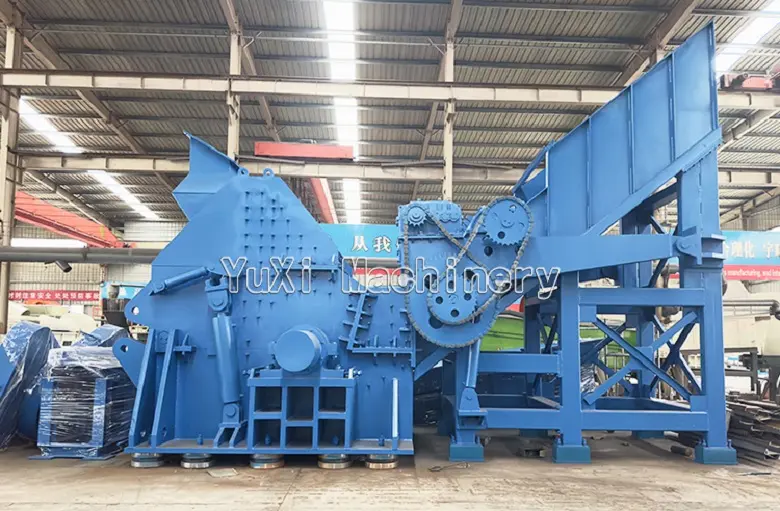
2. Real-World Throughput vs. Rated Capacity
The specs might say “30 tons per hour,” but as engineers, when using hammer mill shredder , we look for steady-state efficiency.
- The Benchmarks: Look for a machine that has independent testing (e.g., a steady 20 tons per hour on scrap iron).
- Torque vs. Speed: A high-torque motor is essential for handling “surges” in the feed (like a heavy engine block hitting the chamber). Without sufficient torque, the rotor will slow down, causing material to bridge and heat to build up.
3. Maintenance Innovation: The “Two-Minute” Rule
Downtime is the silent killer of profits. If it takes your crew half a day to change a screen, you are losing money.
- Rail-Mounted Screen Replacement: Look for a design where the screen plate sits on a rail system. If you only need to loosen 8 screws and use a forklift to pull the screen, you can finish a replacement in minutes.
- Easy Access: Ensure the crushing chamber can be opened easily for hammer inspection and cleaning.
4. Output Quality and Material Liberation
The goal isn’t just to make small pieces; it’s to create clean, densified fractions.
- Tearing and Extrusion: A high-quality mill should tear and extrude the metal into dense flakes or particles. This process “liberates” non-metal fractions (like plastic from TV casings or insulation from wires) and peels away paint.
- Purity for Downstream: The more uniform the output, the better your magnetic and eddy current separators will perform. Clean aluminum and steel flakes fetch a much higher price at the smelter.
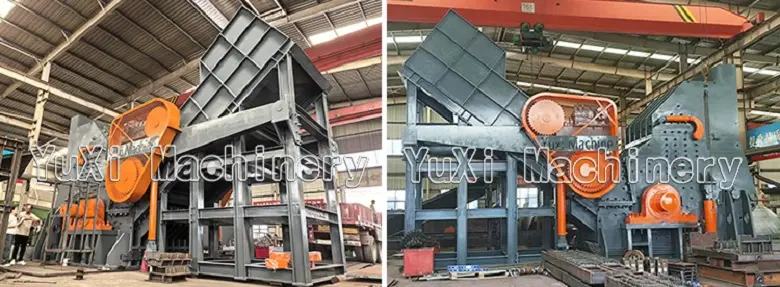
5. Certification and Core Technology
In a high-vibration, high-impact environment, structural integrity is everything.
- CE and ISO Standards: These aren’t just stickers; they ensure the frame and hydraulic components meet international safety and pressure ratings.
- Proven Heritage: Machines based on proven UK core technology often have better-refined hydraulic logic and bearing protection than “no-name” alternatives.
Why Choose Yuxi provider?
“Choosing Yuxi means partnering with a leader in high-performance recycling; our Scrap Metal Hammer Mills combine UK-engineered core technology with a high-torque, 30-ton-per-hour capacity to deliver superior material liberation and densification. With our innovative 2-minute quick-change screen system and high-alloy hammer designs, we ensure maximum uptime and lower operational costs, all backed by ISO certification and 24-hour technical support.”